

Behavioral Health
TreeTop has agreements with local behavioral health providers, and the child and family advocate will coordinate services and make appropriate referrals to other community resources. All services offered at TreeTop are available to all families who receive a referral to our center, regardless of their ability to pay.
How Therapy Helps Children and Caregivers
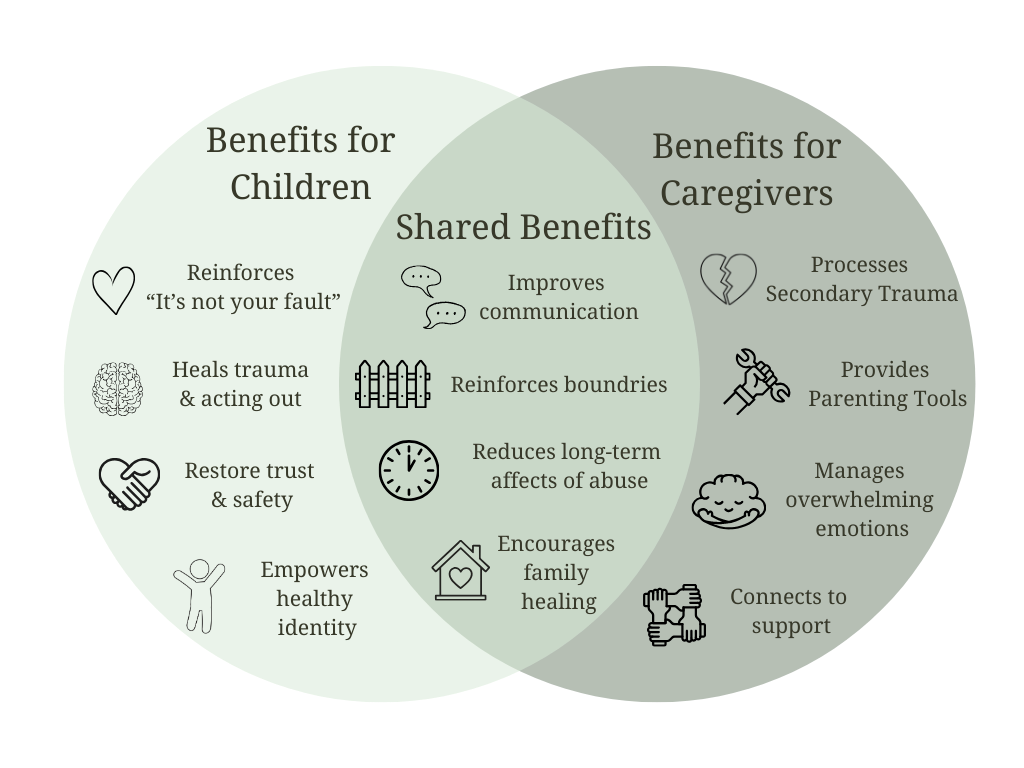
Therapy also helps children work through complex feelings related to the abuse, including confusion, shame, loyalty, or protectiveness toward the person who caused harm. With professional support, children can better understand what happened, regain a sense of control over their development, and integrate experiences that may feel overwhelming or confusing.
Caregivers receive support in understanding the treatment process, managing their own emotional responses, and learning how to talk with their child about what happened in age-appropriate, supportive ways. Therapy also reassures caregivers that the abuse was not their fault and provides guidance when traditional support systems may be unavailable or complicated.

What to Consider When Choosing a Therapist
Finding the right therapist takes time, and that’s okay. The most effective therapy happens when you or your child feels safe, comfortable, and understood.
Here are some questions to guide your search:
Do I feel at ease when speaking with this person?
A short phone call before scheduling can help you get a feel for the therapist’s approach and personality.
What are their credentials and experience?
Ask about education, licensure, and how long they’ve been practicing. It’s also okay to ask about their experience with issues like trauma, abuse, or working with children and families.
What is their approach to therapy?
Are they more supportive or directive? Do they use specific techniques like play therapy, EMDR, CBT, or family systems therapy? Can they adjust their style over time?
What is their confidentiality policy?
Especially when working with children, it’s important to know how private information is handled—especially when multiple family members are involved or when using insurance.
What are their availability and fees?
Ask about hours, payment options, whether they take insurance or offer a sliding scale. It’s okay to ask whether the first session is a paid consultation or if there’s flexibility while you “shop around.”
Understanding Credentials
Not all therapists have the same training. Here’s a quick guide to common credentials and what they mean.
MD — Psychiatrist
A medical doctor who can prescribe medication. Often focuses on individual care and may only offer medication management.
PsyD, PhD, EdD — Psychologist
Doctorate-level therapist. Offers therapy and assessments, but cannot prescribe medication.
LCSW — Licensed Clinical Social Worker
Master’s-level therapist trained in individual and family therapy. Often systems-focused and relationship-oriented.
LPC — Licensed Professional Counselor
Master’s-level therapist, sometimes more individual-focused depending on training.
LMFT — Licensed Marriage & Family Therapist
Specializes in relationships, couples, and family systems.
CAC, LAC — Certified or Licensed Addiction Counselor
Specializes in substance abuse treatment. Levels (I, II, III) reflect education and experience.
Other helpful acronyms you might see:
-
LPCC – Licensed Professional Counselor Candidate (pre-licensure)
-
MSW – Master of Social Work
-
RPT – Registered Play Therapist
-
NCC – National Certified Counselor
-
DBT, CBT, EMDR – Types of therapy modalities (ask what they mean!)
Tip: Anyone can call themselves a “therapist”—so it’s important to ask about licensing and training.

Our Advocates
Becca Bardell
Family Victim Advocate & Operations Manager
Josselin Leiva
Family Victim Advocate + Bilingual Forensic Interviewer
The Healing Process
Your Advocate will continue to support your family’s needs and can connect you with therapy, domestic violence resources, early intervention, and other services to help your family begin the healing process.
